Mobile marine engineers covering lochs, coast, canals and harbours — from a 4 hp tender outboard to a commercial vessel. Based in Dunblane, out on the water most weeks.
Let's clear something up
We do a lot of work on superyachts, and people see that and assume we won't be interested in their 17-footer, their club RIB or their hire fleet outboards. That's the wrong way round. Small boats are exactly what we set the Scottish side of the business up to do.
Outboards from a few horsepower upwards — servicing, impellers, gearbox oils, starting and running faults, winterising and recommissioning. Same care, whatever the size of the engine.
Inboard petrol and diesel servicing, fault finding, cooling and fuel systems, batteries and charging, instrumentation, seacocks and steering. On your berth, your mooring or your driveway.
Fleet servicing programmes for hire boats, safety RIBs, fishery boats and passenger vessels — scheduled around your season so the boats are ready when the customers are.
Servicing, fault finding, electrical and systems work on workboats, aquaculture craft, harbour boats and small commercial vessels, with proper documentation behind it.
Winterisation before the cold arrives and recommissioning before the season starts — the two jobs that decide whether next spring is expensive or uneventful.
Practical training for owners, crew and staff on the systems you've actually got: what to check, what to service yourself, and what genuinely needs an engineer.
What we're actually for
Most marine work gets sold as a trade — a mechanic, a sparky, a fabricator. Plenty of jobs don't split up that neatly. A fault that looks mechanical turns out to be a sensor; a sensor problem turns out to be software; the fix needs a bracket nobody makes. We're set up to take the whole problem rather than the part of it that fits one trade.
Engines, drives, steering, hydraulics, pumps, cooling, fuel and exhaust. Diagnosis first, parts second — we'd rather find out why it failed than fit a new one and wait for it to happen again.
DC and AC systems, batteries, charging and shore power, distribution, instrumentation, navigation and alarm systems, rewiring and fault tracing. ETO-level work on boats that never normally see one.
When the answer doesn't exist off the shelf, we design and build it — brackets, mounts, guards, enclosures, storage and installation kits, made to fit the space you've actually got and fitted properly.
Monitoring, logging, alarms, remote visibility and the small pieces of software that make hardware useful. Not because every job needs it — because some jobs can't be solved without it.
Tell us what's going wrong, what it's costing you and what "fixed" looks like. We'll come back with an approach and a price rather than a shrug. Some of it will be standard engineering; some of it will be a one-off designed for your vessel or your site. Several of the products we now sell started life as exactly this — a recurring problem on board that nobody had bothered to solve properly.
Automation & modern systems
Marine technology moves quickly and most of it is sold to you by whoever makes it. Monitoring, remote sensing, digital switching, alarms, automation, electrification — some of it will genuinely earn its keep on your boat or your site, and some of it is a solution looking for a problem. We'll tell you which is which before you buy it, not after.
What's fitted, how old it is, whether it's still supported, and whether replacing it actually changes anything. Plenty of older systems are fine and should be left alone.
A hire fleet, a fishing boat, a private cruiser and a fish farm all want different things. The right answer depends on how many hours you run, who's operating it and what failure actually costs you.
If it's worth doing, we spec it, install it, commission it and show you how to use it — rather than leaving you with a system nobody on the team understands.
The systems that tend to be worth it are the ones that tell you something is wrong while it's still cheap — bilge and level alarms, battery and charging monitoring, temperature and pressure sensing, shore power and fuel monitoring, and simple remote visibility so you know the state of a boat you're not standing on. The ones that tend not to be worth it are the ones that add complexity to something that was already reliable.
Where we'd rather start
The single most useful thing we can do with a new customer isn't a repair — it's a walk round the boat with you, before anything is broken. It takes a couple of hours and it changes what we're able to do for you for years afterwards.
Together, not on our own. Engines, drives, electrical, plumbing, steering, safety gear — what's fitted, what's been changed, what's been bothering you. Photographed and recorded as we go, with serial numbers and model details captured properly.
A written picture of the boat as it actually is: systems, equipment, condition, and the jobs worth doing, prioritised into what's urgent, what's this season and what can wait.
Once we know your boat, a phone call becomes useful instead of guesswork. We can talk you through a fault, identify the right part first time, and turn up with it already in the van instead of coming twice.
Out of that survey we build a maintenance schedule made for your vessel and the way you use it — not a generic manufacturer interval sheet. What needs doing, when, what we do, what you can happily do yourself, and what to hold in spares so a bad day doesn't become a bad fortnight.
From Dunblane to wherever your boat is
Loch Lomond, Loch Tay, the Trossachs and the Forth. The Clyde, the Holy Loch and the west coast sea lochs. The Caledonian and Forth & Clyde canals. Argyll, Fife, Tayside and the north-east coast.
Yacht problems? What problems?
Coverage
Scotland is a big, awkward coastline with a lot of water in the middle of it. One engineer in a van cannot cover it honestly, so we're not pretending to. We're building a network of qualified marine engineers and Electro Technical Officers who live across the country and work with us locally.
Most of them are serving engineers on rotational leave from commercial ships, offshore and superyachts — people with real tickets and real hours, at home for weeks at a time and glad of skilled work close to home. That's the trick to availability up here: instead of one person driving four hours to you, there's usually somebody good already in your area.
Are you a marine engineer or ETO living in Scotland and working rotation? We'd like to hear from you — get in touch here.
If something's not right, ring us before it turns into a bill. Describe the fault and we'll tell you what we think it is and what to check. If you can sort it yourself in ten minutes, brilliant — go and do that. It costs you nothing and we'd rather be the people you thought to call.
Or ewan@mcintyremarine.com — photos and video of the problem always help.
Send us the detailsWho we work with
The boat doesn't have to be big and the job doesn't have to be complicated. Most of our Scottish work looks like this.
Annual servicing, jobs you've run out of weekends for, and the fault that's been on the list since last summer.
Safety boats and club RIBs kept serviceable and documented, with the engines ready before the season rather than during it.
Fleets of small outboards serviced in one visit, on a schedule, so boats aren't off the water on a Saturday in July.
Planned maintenance and fault response on vessels that carry paying passengers, with the paperwork to match.
An engineer your berth holders can be pointed at, plus infrastructure work — see marina development below.
Servicing, electrical and systems support for working craft, and platforms to work from where there aren't any.
Working boats
Boats that earn their living don't get to wait a fortnight for an engineer. A creel boat tied up is a week's income gone; a feed barge or a workboat off the water holds up a whole site. That's the kind of work we're set up for — quick to answer, willing to travel, and honest when something needs doing properly rather than patching.
We're not trying to replace the yard you already use. Most of what we're asked for is the cover in between: the job the yard is too busy for, the electrical fault nobody can trace, the second pair of qualified hands during a busy spell, or an engineer who can look at mechanical, electrical and control systems in the same visit instead of three separate call-outs.
Running a fleet or a site? The joint survey above works even better across several vessels — one record, one schedule, and spares held once instead of five times.
Marina & waterfront development
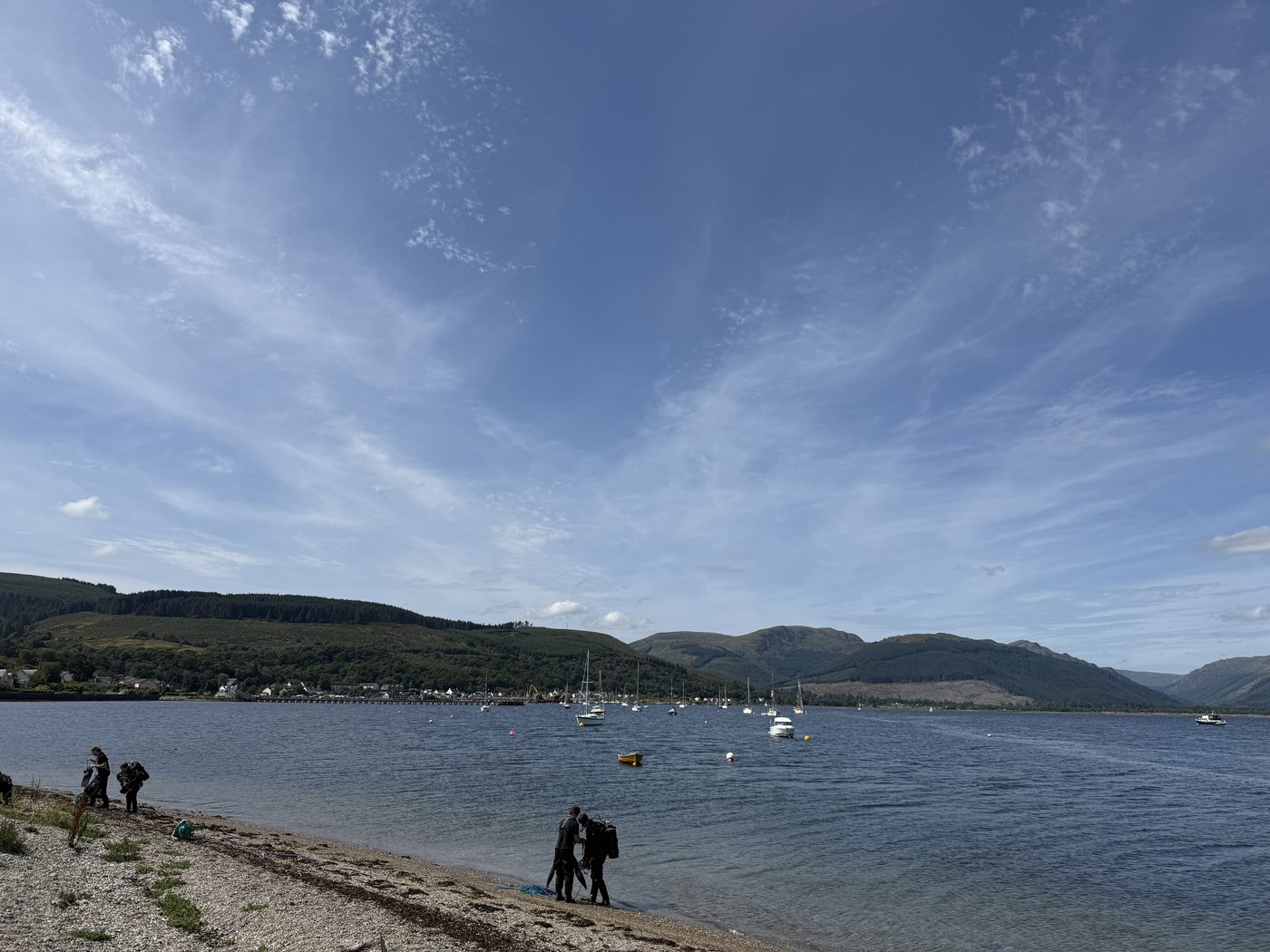
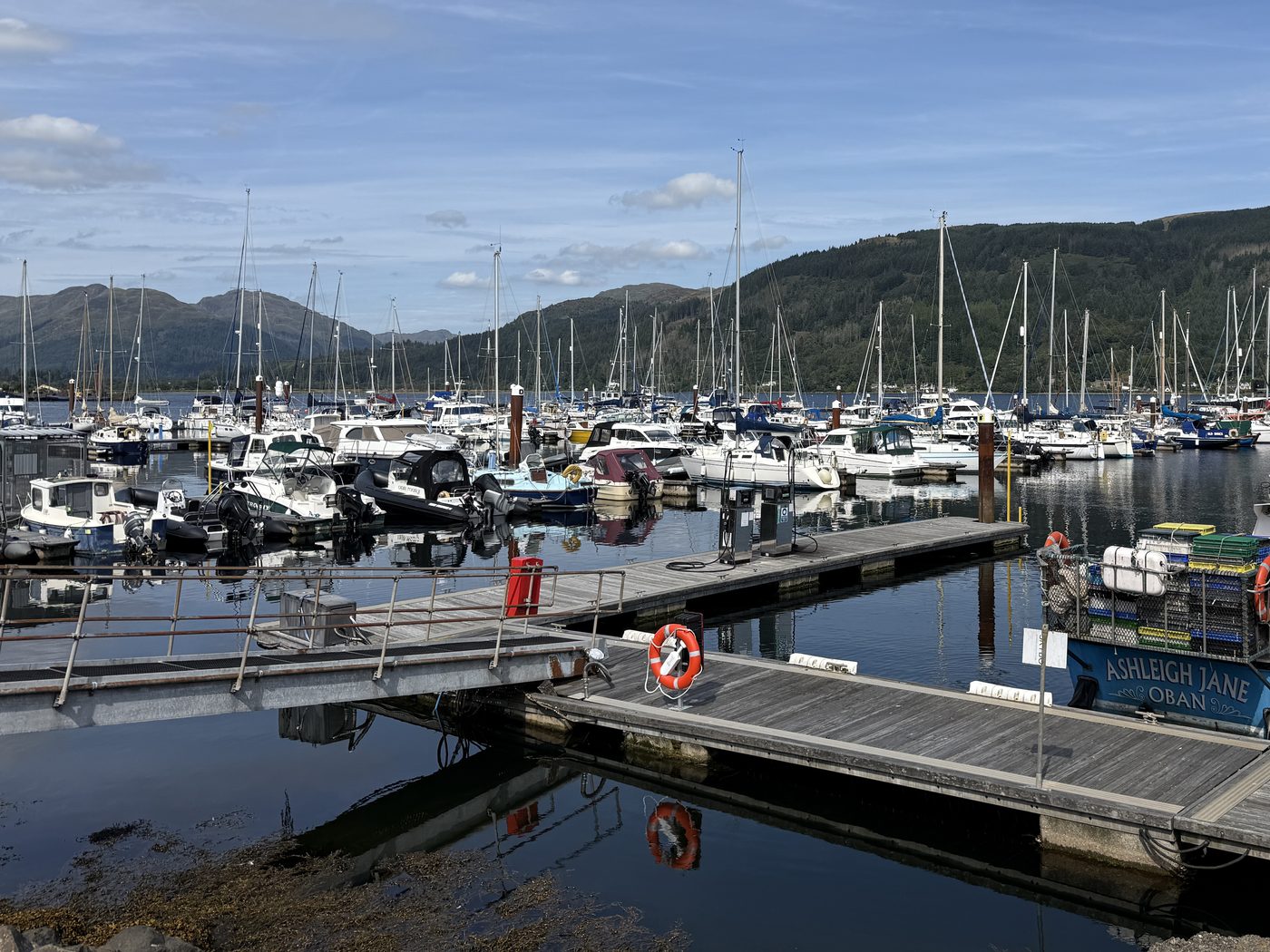
Alongside the engineering, MMI is the Scottish supplier, distributor and installer of BulDock modular floating dock systems — pontoons, finger berths, walkways, work platforms, swim decks and drive-on boat sliders, built from cubes that bolt together and can be extended or reconfigured later.
It suits Scottish sites well: it goes in without piling rigs or heavy plant, it can be assembled on the shore and floated into place, and a site can start with one pontoon and grow rather than committing to a full build on day one.
The boring but important bit
Marinas, harbours and commercial operators need paperwork before they need engineering. We keep ours in order so getting us on site isn't a project in itself.
Public liability insurance in place, with certificates, RAMS and method statements provided on request before we attend.
Happy to go through contractor registration and permit-to-work systems so we can be listed as an approved service provider at your site.
McIntyre Marine Inspections Ltd, registered in Scotland (SC866266) and VAT registered. Based in Dunblane, invoicing and support from here.
Marina or harbour manager? Ask us for our contractor pack and we'll send insurance, RAMS and a service list you can put in front of your berth holders.
Any size, any engine, anywhere in Scotland. If it's a five-minute phone answer, you'll get one for free — and if it's a job, we'll tell you what it takes.
Trusted partners & suppliers